
The postpartum period—often called the “Fourth Trimester”—is a time of incredible joy, but it can also bring sudden hormonal drops, physical exhaustion, and emotional swings.
As new parents look for natural ways to ease the postpartum transition, placenta encapsulation has become one of the most requested holistic postpartum services across Cincinnati and Dayton.
If you’ve been searching online for “placenta encapsulation near me,” you likely have questions: How does it work? Is it safe? What are the actual benefits? Here is everything you need to know about professional placenta encapsulation in Southwest Ohio.
What Is Placenta Encapsulation?
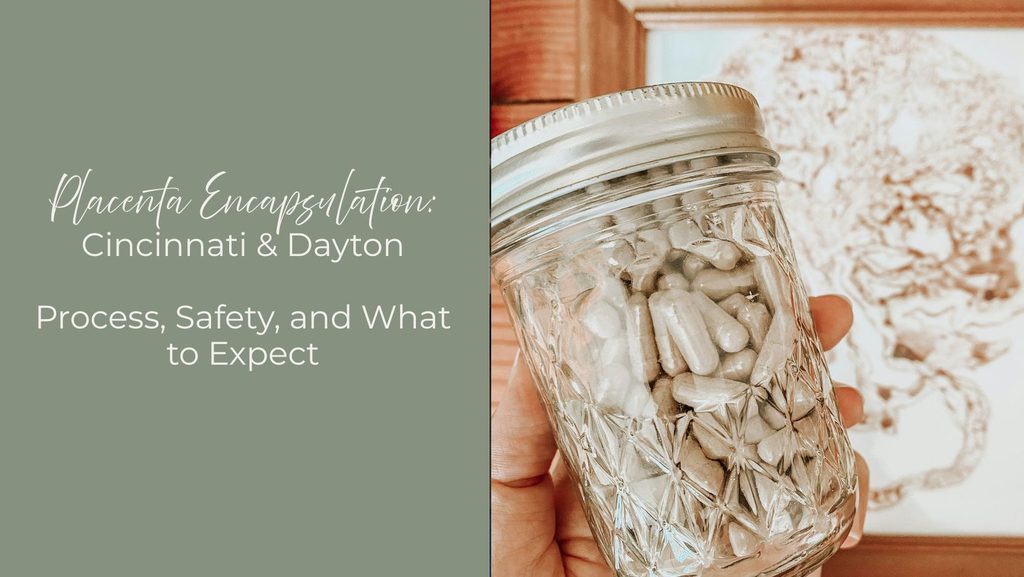
Placenta encapsulation is the process of taking your placenta after birth, safely cleaning, steaming, dehydrating, and grinding it into a fine powder, and placing it into easy-to-swallow capsules for consumption during your postpartum recovery.
Reported Postpartum Benefits
While individual experiences vary, thousands of birthing parents report that taking placenta capsules helps:
- Balance Hormones: Smooths out the drastic drop in progesterone and estrogen following placenta delivery.
- Boost Energy Levels: Replenishes vital nutrients, including iron and B-vitamins depleted during labor.
- Support Milk Supply: Contains prolactin, the primary hormone responsible for lactation.
- Reduce Postpartum Baby Blues: Provides hormonal stabilization during the intense first few weeks home.
- Reduce Postpartum Bleeding: Contains oxytocin, which aids in uterine involution (helping the uterus contract back to its pre-pregnancy size).
The Professional Encapsulation Process: Step-by-Step
When you hire a certified, professional specialist, safety and sanitation are the absolute top priorities.
Step 1: Safe Transport & Storage
Immediately following delivery at your Cincinnati or Dayton hospital, birth center, or home, your placenta is placed in food-grade storage containers and kept chilled on ice. Your specialist arranges prompt pickup directly from your labor room.
Step 2: Inspection & Preparation
In a dedicated, sanitized workspace, the specialist inspects the placenta for tissue health, removes the umbilical cord and membranes, and thoroughly cleanses it with cold water.
Step 3: Steaming (TCM Method)
Following Traditional Chinese Medicine (TCM) guidelines, the placenta is gently steamed over water infused with organic fresh ginger, lemon, and hot peppers. Steaming ensures the tissue reaches a safe internal temperature (killing potential pathogens) while adding warming properties.
Step 4: Dehydration
The placenta is sliced into thin strips and placed into a commercial food-grade dehydrator at a regulated temperature of 160 degrees for 12 to 24 hours to ensure complete drying.
Step 5: Grinding & Encapsulation
Once fully dehydrated, the strips are ground into a fine powder and filled into vegan, gluten-free gel capsules. The capsules are stored in a dark glass amber jar to protect potency.
Safety Protocols You Should Expect
Because the placenta is a biological tissue, strict sanitation standards are non-negotiable. When booking local placenta encapsulation in Cincinnati or Dayton, ensure your provider follows these protocols:
- OSHA Bloodborne Pathogens Certification: Your specialist should hold current certification in handling biological materials.
- ServSafe Food Handler Certification: Proper temperature controls and cross-contamination prevention guidelines must be met.
- One-Placenta Policy: Specialists should only process one placenta at a time in their sanitized workspace to completely eliminate cross-contamination risk.
- Hospital Compliance: The provider should guide you on local hospital release protocols (such as signing release waivers at Bethesda North, Good Samaritan, or Miami Valley Hospital).
🛑 When Is Encapsulation NOT Recommended?
Encapsulation should not be performed if there was an active uterine infection (chorioamnionitis) during labor, if the placenta was sent to a pathology lab for chemical analysis, or if it was not chilled properly within 3 to 4 hours after birth.
How to Book Placenta Encapsulation Near You
Arranging placenta encapsulation is simple when planned ahead during your third trimester.
- Book Your Specialist: Secure your due date around 28–34 weeks so your specialist is on call for your birth.
- Pack Your Cooler: Include a small cooler and gallon-sized ziplock bags in your hospital bag.
- Notify Your Care Team: Let your OB or midwife know on admission that you plan to keep your placenta.
- Text Your Specialist: Once baby is born, send a quick text! Your specialist will pick up the placenta and deliver finished capsules to your doorstep within 48 to 72 hours.
Professional Placenta Services in Cincinnati & Dayton
Investing in your Fourth Trimester recovery helps you show up feeling energized, balanced, and supported for your newborn.
🌸 Ready to Secure Your Postpartum Recovery?
Stork Helpers provides certified, safe, and professional placenta encapsulation services across Greater Cincinnati, Dayton, and surrounding communities. Book Your Local Placenta Encapsulation Package Today to secure your date!