
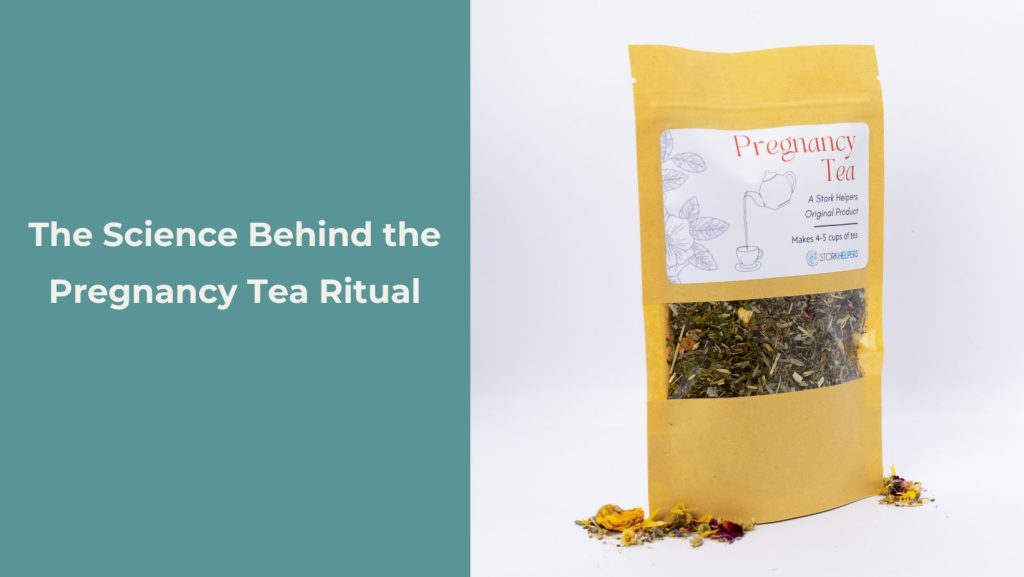
We’ve all seen the “pregnancy tea” aisle in the health food store. It’s often marketed with beautiful, soft-focus imagery of serene mothers, but for many women, the question remains: is this just another wellness trend, or is there actual science behind the ritual? When we dig into the history and the constituents of the traditional “pregnancy infusion”—specifically Red Raspberry Leaf and Nettle—we aren’t just talking about a pleasant drink. We are talking about a centuries-old practice of uterine and circulatory support.

The Forgotten Science of Uterine Toning
The star of the show in most pregnancy tea blends is Rubus idaeus, or Red Raspberry Leaf. Midwives and herbalists have recommended this for centuries, not because it causes labor, but because of a specific alkaloid it contains called fragarine.
Unlike caffeine, which stimulates your nervous system, fragarine works on the smooth muscle of the uterus. Think of your uterus as the hardest-working muscle in your body. During pregnancy, it stretches and grows exponentially. Raspberry leaf helps “tone” this muscle. The goal isn’t to force contractions; it is to assist the uterus in functioning more efficiently during the labor process. By regularly consuming a high-quality infusion, you are effectively “training” your uterine muscles to coordinate their efforts, which can lead to a more effective, organized labor.
Nettle: Nature’s Multivitamin
If Raspberry Leaf is the “toner,” Nettle (Urtica dioica) is the “builder.” Pregnancy is a state of massive nutrient demand. Your body is building a skeleton, a brain, and an entirely new circulatory system for your baby. This requires massive amounts of bioavailable iron, magnesium, and calcium.
Nettle is a nutritional powerhouse. It is exceptionally rich in chlorophyll, which is chemically similar to human hemoglobin. For many pregnant women, maintaining adequate iron levels is a constant battle, often leading to fatigue or the need for harsh iron supplements that cause constipation. Nettle provides a gentle, plant-based way to support blood health. It is also packed with Vitamin K and essential minerals that support your body’s ability to recover immediately postpartum.
The Importance of the “Long Infusion”
There is a secret to getting these benefits that many people miss: the steep time.
Most of us are used to the “tea bag” method—dipping a bag in hot water for three minutes. But herbs like Nettle and Raspberry Leaf are dense. To pull the minerals out of the leaf and into your water, you need time. This is what herbalists call a “long infusion.”
To get the medicinal benefit, you should steep your herbs (or your tea bag) for at least 20 minutes, or ideally, four hours to overnight. This allows the water to draw out the magnesium, calcium, and iron. When you drink a long infusion, you aren’t just drinking “flavored water”; you are drinking a mineral-dense tonic that your body can absorb easily.
Creating Your Ritual
Pregnancy is often a time of high anxiety and constant “to-do” lists. The beauty of the pregnancy tea ritual is that it forces you to slow down. Whether you drink it hot in the morning or iced in the afternoon, it is a moment where you are literally nourishing your body and preparing for the physical work ahead. It is a time to breathe, to connect with your baby, and to acknowledge the transformation you are currently navigating.

Your body is preparing for one of the greatest physical feats a human can perform. Why not give it the tools it needs to succeed? By integrating this ancient, science-backed ritual into your daily routine, you are taking an active role in your own health and setting the stage for a stronger recovery.