
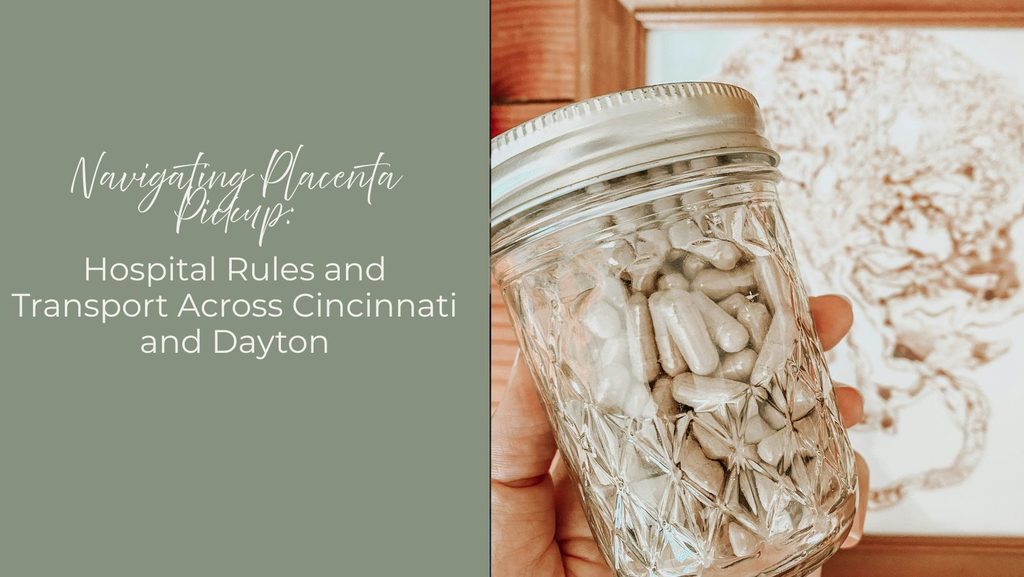
One of the most common questions expecting parents ask when considering placenta encapsulation is: “How does the placenta actually get from the hospital room to the processor?”
Because babies rarely arrive during convenient business hours, and every regional hospital network enforces its own rules regarding biological asset release, navigating local logistics can feel intimidating. For families giving birth across the Cincinnati and Dayton corridors, knowing what to expect makes all the difference. Here is how local placenta pickup works across Southwest Ohio.
The Southwest Ohio Hospital Landscape and Placenta Release
The Greater Cincinnati and Dayton regions feature a robust network of world-class hospital systems, including TriHealth, Mercy Health, Kettering Health, Premier Health, and The Christ Hospital.
While most local medical facilities are accommodating when it comes to releasing the placenta for personal use, hospital policies vary regarding when and how the asset must leave the room:
- Discharge Pickups: Many local facilities permit the placenta to remain in the mother’s room refrigerator until normal hospital discharge, allowing for scheduled daytime pickups.
- Immediate Removal Policies: Some hospital units enforce stricter room-storage rules, requiring the placenta to be removed from the maternity ward within a specified window following delivery—frequently triggering middle-of-the-night coordination.
Step-by-Step: How Stork Helpers Manages Local Pickups
When you book encapsulation with Stork Helpers, you don’t have to worry about coordinating logistics while holding a newborn. Here is how local transport is handled seamlessly:
- The Prenatal Plan: Before your due date, we review your specific delivery location, hospital paperwork requirements, and release forms so you and your partner know exactly what to ask your nurses.
- Proper Cooling Setup: We instruct families on packing a medical-grade transport cooler with ice packs, ensuring the placenta is safely stored immediately following birth in compliance with health standards.
- Direct Communication: When labor begins, your birth partner keeps our team updated. Once baby arrives and the placenta is released, we coordinate directly with your designated contact or birth team to arrange a prompt, secure pickup from the facility or your home.
- Secure Transport: The asset is transported in dedicated, insulated transport containers back to our secure processing facility to begin the safety and preparation workflow.
Tips for Parents Delivering in Cincinnati and Dayton
To ensure a smooth, stress-free placenta release at your local hospital, keep these three practical tips in mind:
- Talk to Your OB/GYN or Midwife Early: Mention your plan to encapsulate during a prenatal visit so your provider can note it in your hospital chart.
- Bring Your Own Cooler: Pack a small, hard-sided cooler and a supply of fresh ice packs in your hospital bag so your birth partner has everything ready post-delivery.
- Know Your Discharge Paperwork: Some facilities require a signed release form or waiver. Having your Stork Helpers paperwork filled out digitally beforehand ensures zero delays.
Conclusion
Navigating hospital protocols doesn’t have to be stressful. By partnering with a local encapsulation team familiar with the policies of Cincinnati and Dayton hospitals, you ensure your placenta is handled safely, professionally, and on time—leaving you free to focus on bonding with your new baby.